Goodbye to Eating While Driving in Canada – Canada is moving toward stricter road safety enforcement as new distracted driving rules begin reshaping how motorists behave behind the wheel. Under updated regulations, even common habits such as eating while driving can now attract heavy penalties in certain circumstances. The changes are designed to reduce collisions caused by divided attention, a growing concern across the country. With fines that can reach as high as $10,000 in serious cases, Canadian drivers are being urged to rethink everyday actions that may compromise safety. This article explains what the new rules mean, how enforcement works, and what motorists should know to stay compliant.
Eating While Driving Laws Affect Canadian Drivers Nationwide
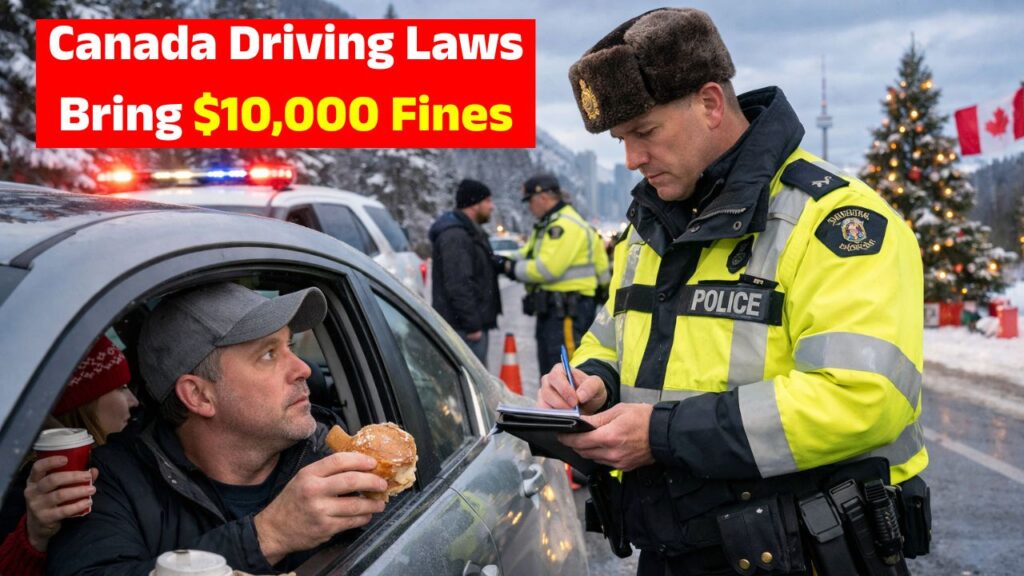
Across Canada, distracted driving laws have expanded beyond mobile phone use to cover a wider range of risky behaviors. Eating while driving is not automatically illegal everywhere, but it can become an offence if it interferes with proper vehicle control. For Canadian drivers, this means actions like holding food with both hands, looking away from the road, or spilling items that cause sudden reactions may trigger penalties. Police officers assess whether a driver’s attention was compromised, using factors such as lane drifting or delayed braking. These rules aim to reinforce safer habits and reduce preventable accidents on busy roads.
How Provincial Rules in Canada Trigger Fines Up to $10,000
Under Canada’s traffic laws, enforcement largely happens at the provincial level, which is why penalties can vary widely. In provinces such as Ontario and British Columbia, distracted driving offences already carry steep fines, demerit points, and possible licence suspensions. When eating contributes to careless or dangerous driving, the offence can escalate, leading to court-imposed fines that climb toward $10,000 in severe cases. Canadian motorists should understand that repeat offences, collisions, or endangering others significantly increase penalties. The message from provincial authorities is clear: any distraction that puts lives at risk will be treated seriously.

| Aspect | Details |
|---|---|
| Behavior Covered | Eating or drinking while driving if it causes distraction |
| Maximum Fine | Up to $10,000 in serious or court-based cases |
| Enforcement Level | Provincial traffic authorities across Canada |
| Additional Penalties | Demerit points and licence suspension |
Road Safety Changes Impact Motorists Across Canada
These updated rules reflect a broader shift in how road safety is managed across Canada. Authorities are focusing on real-world driving behavior rather than listing specific banned actions. For motorists across Canada, this means greater responsibility to remain fully attentive at all times. Eating, adjusting controls, or handling objects may all be scrutinized if they affect driving performance. Education campaigns now emphasize prevention, encouraging drivers to finish meals before starting trips. By addressing everyday distractions, transport officials hope to lower accident rates and create safer conditions for pedestrians, cyclists, and fellow drivers.
What Canadian Motorists Should Know About Distracted Driving Enforcement
For Canadian motorists, understanding how enforcement works is essential. Police officers rely on observation, dash cameras, and incident evidence to determine whether a driver was distracted. Eating alone may not result in a ticket, but combined with unsafe driving behavior, it can lead to significant consequences. Drivers are advised to plan ahead, take breaks, and avoid multitasking behind the wheel. As enforcement tightens, compliance becomes the safest and most cost-effective choice. Staying informed about local regulations helps drivers avoid fines while contributing to safer roads nationwide.
Frequently Asked Questions (FAQs)

1. Is eating while driving illegal everywhere in Canada?
No, but it can be penalized if it causes distracted or unsafe driving.
2. Can fines really reach $10,000 for eating while driving?
Yes, in serious cases where eating contributes to dangerous driving or court convictions.
3. Do these rules apply the same way in every province?
No, penalties vary by province, but all focus on preventing driver distraction.
4. How can drivers avoid penalties under these new rules?
By avoiding distractions and keeping full attention on driving at all times.