Goodbye to Manual Traffic Checks – Canada is entering a new era of road safety enforcement as artificial intelligence begins to replace traditional roadside traffic checks. With AI-powered cameras now being deployed across several provinces, drivers are facing stricter, faster, and fully automated enforcement of traffic laws. These smart systems are designed to detect speeding, red-light violations, distracted driving, and other offences without police officers stopping vehicles manually. For Canadian motorists, this shift brings both improved safety and serious consequences, including automatic fines of up to $1,000 issued directly to registered vehicle owners.
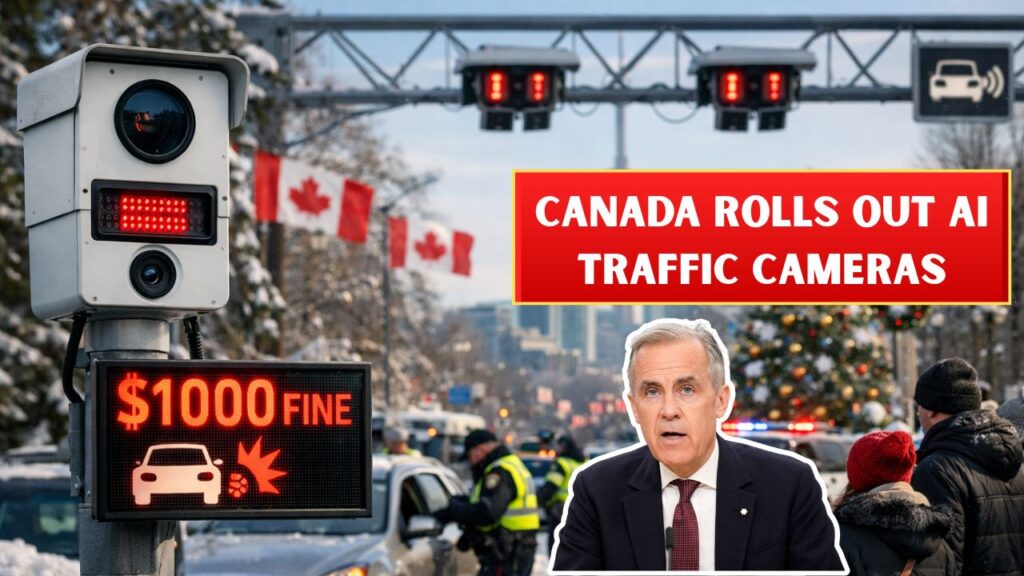
AI Traffic Cameras Enforcement Across Canada’s Road Safety Network
The rollout of AI traffic cameras across Canada marks a major change in how road rules are enforced. Using advanced image recognition and machine learning, these systems monitor traffic 24/7 and capture violations in real time. Unlike manual checks, AI cameras do not rely on officer availability, allowing continuous enforcement on busy highways and urban intersections. Canadian drivers should note that these cameras can identify speeding patterns, red-light breaches, and even mobile phone use behind the wheel. The goal is to reduce accidents, improve compliance, and ease pressure on law enforcement while ensuring consistent penalties nationwide.
$1,000 Automatic Traffic Fines for Canadian Drivers Under AI Monitoring
Under the new AI-based enforcement approach, motorists in Canada may receive automatic fines reaching $1,000 depending on the severity of the offence. Once a violation is detected, the system records the evidence and generates a penalty notice sent directly to the vehicle owner. There is no roadside warning or immediate interaction with police. Canadian authorities argue that this method removes human bias and ensures equal treatment for all road users. However, drivers must be more vigilant, as even brief lapses in attention could lead to costly penalties without any chance for on-the-spot explanations.

| Violation Type | Detection Method | Maximum Fine | Applies In |
|---|---|---|---|
| Speeding | AI speed cameras | $1,000 | Multiple provinces |
| Red-light violation | Intersection cameras | $500 | Urban areas |
| Distracted driving | AI image analysis | $1,000 | Select regions |
| Unregistered vehicle | Plate recognition | $600 | Across Canada |
How AI Camera Rules Affect Motorists Throughout Canadian Provinces
For motorists throughout Canadian provinces, AI camera enforcement changes everyday driving habits. Drivers can no longer rely on spotting police vehicles or temporary checkpoints to adjust behaviour. Instead, compliance must be consistent at all times. Provincial governments are gradually expanding camera coverage to school zones, highways, and high-risk intersections. While some Canadians raise privacy concerns, officials maintain that data is used strictly for traffic enforcement. As coverage expands, drivers should regularly review provincial traffic laws to avoid unintentional violations and unexpected fines arriving by mail.
Future of Automated Traffic Law Enforcement in Canada
The future of traffic enforcement in Canada is expected to become even more automated as AI systems improve. Authorities are exploring integration with real-time traffic management, accident prevention alerts, and data-driven road planning. For Canadian residents, this could mean safer roads but also stricter accountability. Education campaigns are being introduced to help drivers understand how AI cameras work and what behaviours are monitored. As technology advances, staying informed will be essential for avoiding penalties and adapting to a road system where machines, not officers, are the primary enforcers.
Frequently Asked Questions (FAQs)

1. Do AI traffic cameras operate all day in Canada?
Yes, AI traffic cameras operate 24/7 and monitor vehicles continuously.
2. Can drivers dispute an AI-issued traffic fine?
Yes, Canadian drivers can follow provincial dispute processes listed on the fine notice.
3. Are AI cameras used in every Canadian province?
No, deployment varies by province, but expansion is ongoing.
4. Will AI cameras replace traffic police completely?
No, they support enforcement, while police still handle complex and dangerous situations.