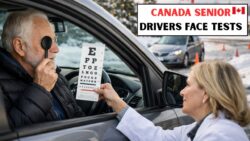
Canada Old Senior Driving Rules – Canada is preparing for a major shift in how senior drivers are assessed, as long-standing age-based driving rules are replaced with mandatory testing starting 5 January 2026. The new approach is designed to balance road safety with independence for older adults, responding to an aging population and rising concerns about accident risks linked to health-related driving limitations. Instead of relying mainly on licence renewals, Canadian authorities are introducing structured evaluations to ensure senior motorists remain fit to drive. These changes will affect millions of older drivers nationwide and reshape how driving privileges are maintained across the country.

Mandatory Senior Driving Tests for Canadian Seniors From 2026
Mandatory senior driving tests for Canadian seniors will become a nationwide reality from 5 January 2026, replacing many of the relaxed renewal rules older drivers previously relied on. Under the updated system, drivers above a defined age threshold will undergo regular assessments that may include vision screening, cognitive evaluations, and, in some cases, on-road testing. The goal is not to remove licences unfairly, but to identify risks early and support safer driving decisions. For many older Canadians, this means greater clarity about their driving ability, while provincial transport authorities gain standardized tools to reduce age-related collision risks without blanket restrictions.
New Licence Renewal Rules Affect Older Drivers Across Canada
New licence renewal rules affecting older drivers across Canada aim to standardize how fitness-to-drive is measured, regardless of province or territory. Previously, renewal processes varied widely, with some regions requiring only medical declarations while others applied stricter checks. From 2026, seniors may need to complete scheduled assessments at set age milestones, creating a more uniform system nationwide. Canadian policymakers emphasize that the changes focus on capability rather than age alone, ensuring responsible drivers remain on the road. The reform also aligns with healthcare data, linking medical fitness more closely to licence eligibility.

| Category | Updated Requirement |
|---|---|
| Start Date | 5 January 2026 |
| Target Group | Senior drivers above age threshold |
| Assessment Types | Vision, cognitive, medical, road tests |
| Frequency | At regular age-based intervals |
| Purpose | Improve road safety and driver fitness |
Driving Safety Reforms for Older Motorists Nationwide
Driving safety reforms for older motorists nationwide reflect Canada’s broader effort to adapt transportation policies to demographic change. With seniors representing a growing share of licensed drivers, authorities argue that consistent testing protects both drivers and the public. These reforms also encourage early conversations about alternative transport options, helping older adults plan ahead if driving becomes unsafe. Importantly, officials stress that failing an assessment does not automatically end mobility, as conditional licences or retraining programs may be offered. The approach promotes dignity while prioritizing safety on Canadian roads.
How Provincial Transport Agencies Will Apply Canada’s New Testing Rules
Provincial transport agencies across Canada will be responsible for applying the new senior testing rules within their existing licensing systems. While federal guidance sets the overall direction, provinces can tailor assessment frequency and delivery methods to local needs. This may include partnerships with healthcare professionals, digital booking systems, and refresher driving courses. For older Canadians, understanding provincial procedures will be essential to avoid disruptions. Clear communication and gradual implementation are expected to help seniors adapt smoothly to the updated requirements.
Frequently Asked Questions (FAQs)

1. When do the new senior driving tests start in Canada?
The mandatory testing system begins nationwide on 5 January 2026.
2. Will all senior drivers need to take a road test?
Not all seniors will require road tests; assessments depend on age, health, and screening results.
3. Can a senior driver lose their licence immediately after failing a test?
In many cases, retraining, medical reviews, or conditional licences may be offered instead.
4. Are these rules the same in every Canadian province?
The core policy is national, but provinces may adjust how tests are scheduled and delivered.